Home lock problems rarely come one at a time. The front deadbolt sticks, the slider latch has stopped catching, nobody has the key to the side gate, and the door from the garage has never locked properly since the day you moved in. A single visit can work through the whole list.
That includes getting you back in after a lockout, cutting keys when the last one disappears, installing deadbolts where there are none, repairing locks that bind or spin, swapping worn hardware, and putting the doors you choose on one key. You hear what each lock needs, and the choice of what gets done is yours.
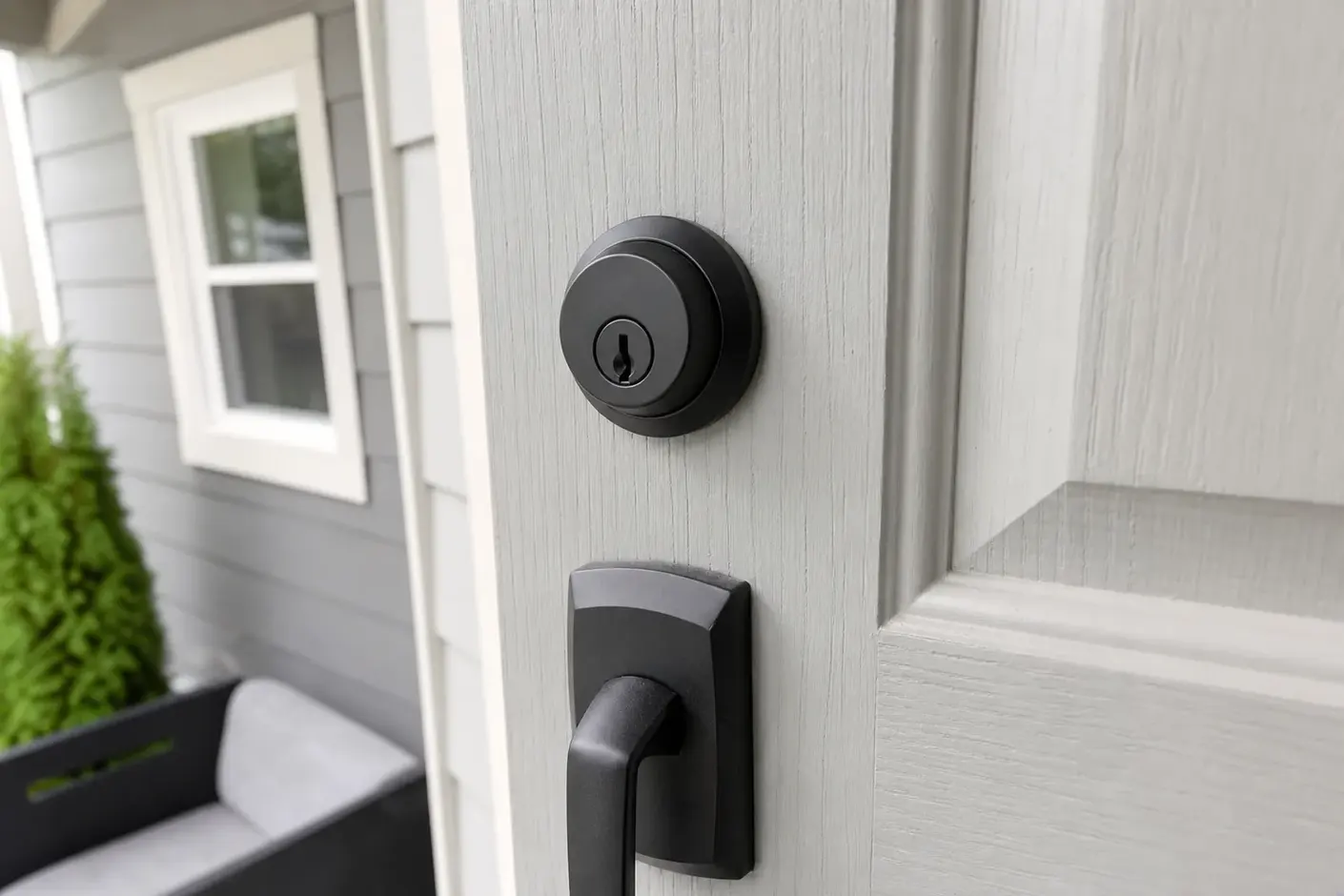
Houses that went up in the last several years usually came with builder-grade locks: they work well enough on day one, then wear quickly once a busy family starts slamming doors several times an hour. A deadbolt that grinds, a lever that droops, or a latch that needs a shove to catch is often the first sign.
Those locks can be rebuilt or swapped for sturdier ones that fit the same holes, and the strike plates can be anchored with longer screws into the framing so the door holds when someone leans on it. The garage entry door, which in many of these homes leads straight into the kitchen, deserves the same deadbolt as the front.
Closer to the historic downtown, houses have been through several owners and several eras of hardware. It is common to find a front door, a back door and a side door that each take a different key, and at least one lock that only works if you lift the door while you turn it.
Most of that is fixable without new hardware. Latches get realigned, worn cylinders get rebuilt, and compatible locks are brought onto a single key. When a lock really is past saving, you hear that before it is replaced, along with what would suit an older door.
Tell us where the house is and what happened. Before any door is opened, the technician sees a photo ID with the address on it, or a bill, a lease or closing papers alongside it. That check is there for every home on the street, not just yours.
Once you are back inside, the lock that let you down gets a look. If the keys are lost rather than locked in, the cylinder can be re-pinned or replaced, and new keys are cut before the technician drives off, so nobody else can use the old ones.
If it is late, cold or raining, wait in the car or next door rather than on the porch, and keep your phone on: the technician calls as they arrive. If a child or a pet is inside, say so first.
Sliding glass doors often have the weakest latch in the house, a small hook that wears with every trip to the grill. A replacement latch, or an added lock that keeps the door from being lifted off its track or forced sideways, makes a big difference for very little disruption.
Side gates and backyard gates are usually on a padlock or a lock nobody has the key to anymore. A keyed gate lock can often be set to match the house, so the same key opens the gate, the back door and the front.
A shed or a detached workshop can be brought onto the same key as well, as long as its lock is compatible. Outdoor locks take the worst of the weather, so a rusted or seized one is usually replaced rather than rekeyed.
Most homes are finished in one visit.
Which doors, what each one is doing, and whether gates or a shed are part of it.
Photo ID and a bill, lease or closing papers, or the owner's okay for a rental.
Opened, repaired, rekeyed or replaced, after you hear what each one needs.
New keys tested with you and old ones retired before the technician leaves.
Wake Forest has grown fast, and a house that changed hands recently may still answer to keys held by the builder, the painters, a cleaner or the family before you. Moving day is the right time to retire all of them, whether that means new pins in the existing locks or new hardware on a door that needs it.
If the house came with a keypad deadbolt, the codes in it belong to whoever set them. Clearing them and choosing new ones takes minutes, and the backup key cylinder on that keypad gets the same new pins as the rest of the doors, so one fresh key covers the whole house.
Tenants can have a stuck lock repaired or a door opened after a lockout with a photo ID and the lease. Changing or rekeying a lock needs the landlord's okay first, and many landlords want a copy of any new key.
Landlords and property managers call between leases for rekeys, for keys a departing tenant never returned, and for locks that a rental's steady traffic has worn out. One call can cover several houses.
For a house sitting empty between tenants, a manager can meet the technician instead of the owner, as long as the owner has said so. The visit ends with a short note of which keys open which doors, so the next handover is simple.
Yes. After the ID and address check, the door is opened and the lock is looked at so it does not happen again.
Usually in one visit. The strike is moved or the latch realigned so the bolt slides in without anyone leaning on the door.
Yes. A worn latch can be replaced, and an added lock that stops the door being lifted or forced is a common upgrade.
Yes. Side and backyard gates can get keyed locks, often keyed to match the house.
In most homes, yes, and it should. It opens straight into the house, so it deserves the same lock as the front door.
Yes. Lockouts and repairs need the tenant's ID and lease; changing a lock needs the landlord's okay first.
Usually, when the locks share a keyway. If one does not, a matching lock replaces it so a single key opens the front, back, side and garage entry doors.
Yes. Every lock on the list is looked at and the estimate is free before any work begins.
Tell us your street and we send a tech.