Before copies are cut, it helps to know how many keys are already out there. Houses here change hands often, and a key from two owners ago can still be sitting in a kitchen drawer across town. When nobody can say how many exist, the honest first step is a rekey, and after that copies go only to the people you choose.
When the count is already right, the job is simpler: a copy for each person who lets themselves in, one for the neighbor who brings in packages, and one more stored somewhere better than the planter by the front step.
Writing down who holds which key, even on the inside of a cabinet door, makes the next round of copies, or the next rekey, much simpler.
In a commuter household, one person leaves before sunrise for Raleigh or Durham and someone else handles pickup, practice and the dog. The garage keypad covers most days, but the power goes out, the keypad battery dies, or the car with the remote is parked downtown. A real key for the door from the garage keeps those days from turning into a lockout.
Copies are cut for the front door, the garage entry and the patio slider, labeled if you like, and each one is tried in its lock before the technician leaves. A key that needs a shoulder against the door to turn is sent back to the machine, not handed over.
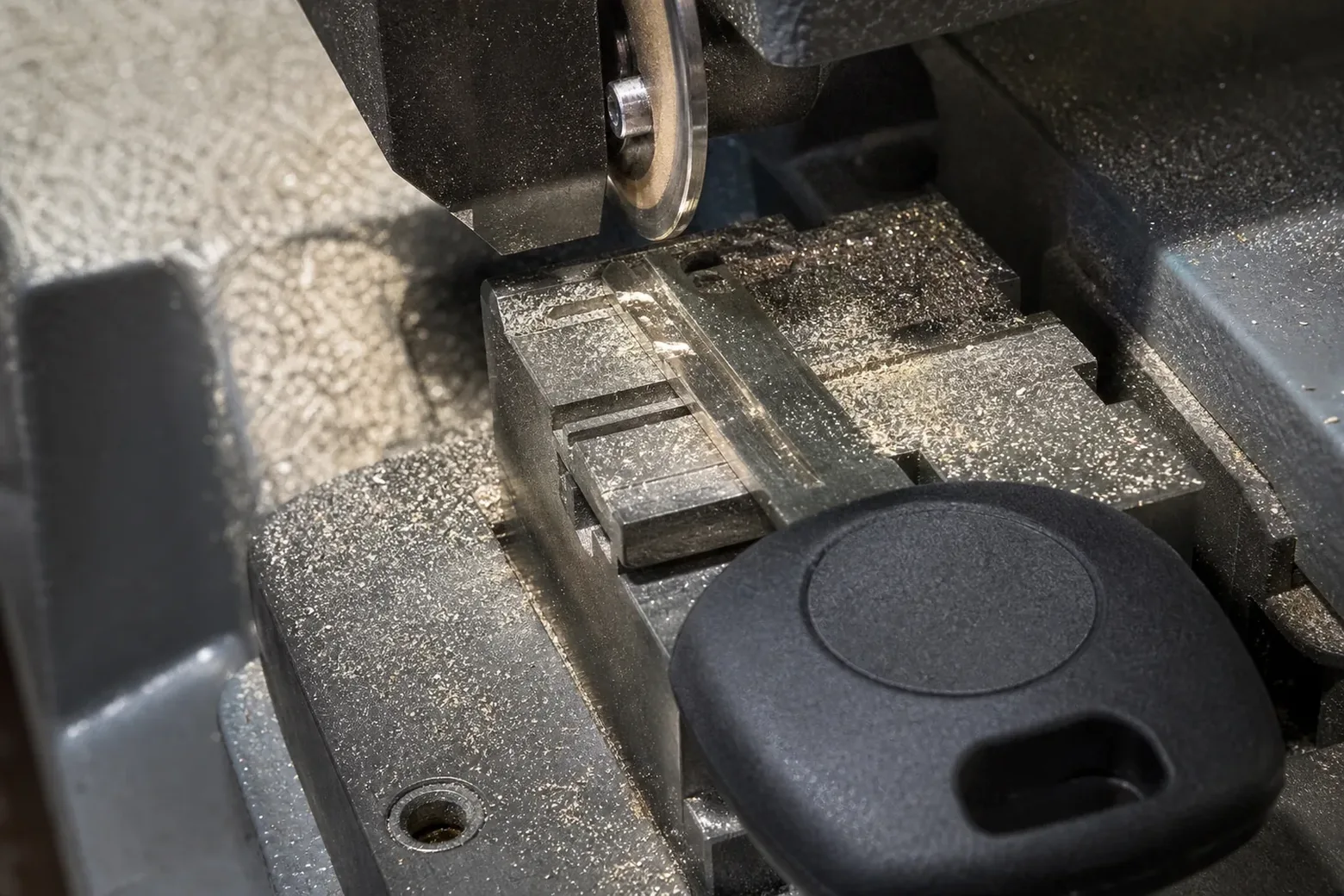
A key that has been copied again and again gathers small errors with every generation, and the newest copy is usually the one that catches. Cutting yet another from it only passes the problem along.
In that case the better route is a fresh key made to suit the lock, with the copies cut from that one. The technician compares the key with the lock before the machine starts and tells you which way the job will go.
If the lock is the trouble, with a worn cylinder or a bolt that drags in its strike, the lock is dealt with first. New keys in a tired lock wear out just as fast as the old ones did.
Some houses near the downtown square still carry their original locks, and their keys can be less common than a modern house key. Many can still be copied on site.
When a blank is hard to find, you hear that before anything is cut, along with the options: a rekey onto a standard key, or a new lock chosen to suit the door's age and character. Nothing on an older door changes without your okay.
Older doors also tend to have a second lock that nobody uses anymore, often a rim lock or a deadbolt whose key went missing decades ago. It can be given keys again, matched to the rest of the house, or retired, whichever suits how you use the door.
Home offices have filing cabinets and desk drawers on keys that were never copied. Cluster mailboxes in the newer neighborhoods run on keys that an association or a building often controls, and the padlock on the shed or the storage unit usually has one key and one key only.
Most of those can be copied on site. Mailbox locks owned by an association or a building need their okay first, and any key marked do not duplicate is copied only with written permission from whoever is responsible for it.
Padlocks around the property can often be keyed to match the house, which leaves one fewer key to keep track of.
A home office that keeps client files may want those cabinets on keys of their own, separate from the house, so that a family copy never opens them.
A kitchen remodel or an addition can keep a crew coming and going for weeks, and the easiest arrangement is one copy for the crew lead that opens a single door, usually the garage entry or a side door, rather than the family's full set.
When the work wraps up, that copy comes back, or the door it opened is rekeyed and the copy is retired without a conversation. Builders and trades in a fast-growing town carry a lot of keys from a lot of houses, and keeping yours out of that pile is the simple goal.
If a keypad suits that kind of access better than a key, a temporary code can be added and later deleted on its own.
Often a short stop, and easy to fold into a rekey or lockout call.
House, garage entry, mailbox, padlocks, and how many copies of each.
Worn keys are matched against their locks before cutting.
You hear the plan and approve it first.
New keys are tried in their own locks while you watch.
Car keys and fobs are cut and then programmed to the car, so they are a job of their own. That work happens wherever the car is parked, an office lot or a parking deck included, and it is covered on our car key page.
If the house and the car both need keys, say so on the call and both can be handled on one trip.
If you are not sure who still holds keys, yes. A rekey retires every old key, and the copies made afterward go only to the people you choose.
Often, but a copy of a worn key sticks too. A fresh key made to suit the lock is usually the better route, and you hear which it will be before cutting.
Most of them, yes, on site during the same visit.
Yes, for most mailbox locks. Boxes owned by an association or a building need the owner's okay first.
Only with written permission from the owner or manager who controls them.
When the locks are compatible, a rekey puts them on one key, and the copies come after that.
Yes. A single copy for one door is easier to track, and it can be retired with a rekey or a deleted code once the work is done.
Yes. Once ownership is confirmed, the lock is rekeyed or a key is made to fit it, and copies follow.
Yes, before any key is cut.
Tell us your street and we send a tech.